.png)


![CA-Recorder-Mobile-CR-2025[54].jpg](https://static.wixstatic.com/media/09587f_b989949ec9bc46d8b6ea89ecc2418a8a~mv2.jpg/v1/fill/w_370,h_150,al_c,q_80,enc_avif,quality_auto/CA-Recorder-Mobile-CR-2025%5B54%5D.jpg)


Student study: Inflation takes bite out of grocery budgets
- Apr 10
- 2 min read
By SAM GREENE
The Consumer Price Index is the most widely cited measure of inflation in the U.S. It tracks prices across hundreds of categories, from housing to health care to food, and produces a single number reported every month. When inflation comes up in the news, that is usually the number being referenced. Most people assume their grocery bill more or less follows it.
It does not.
Starting in December 2025, as a passion project I built a local version of that index for Katonah. Every month I record the price of the same 30 items from DeCicco’s Family Markets for ZIP code 10536: dairy, eggs, pantry staples, produce and protein. Each item is measured the same way each month. The goal is a basket consistent enough to actually track over time.
December 2025 is the baseline, with the index set at 100. By January 2026, the basket had risen to 112.30, a jump of 12.3% in a single month. It pulled back slightly in February to 108.61, then climbed again in March to 112.88. The cumulative increase from December through March is 12.88%.
For comparison, official CPI data sourced from FRED (the Federal Reserve Economic Data maintained by the Federal Reserve Bank of St. Louis) shows the U.S. all-items CPI rose about 0.44% over the same period. The New York metro area index rose about 0.96%. The large gap is visible in the accompanying chart.
Official CPI covers housing, services, and much more than food, which is part of why it moves more slowly. But that also means it can quietly understate what people actually feel when they go to the store. Groceries are one of the most frequent purchases a household makes, and locally, they can move in ways the national number never captures.
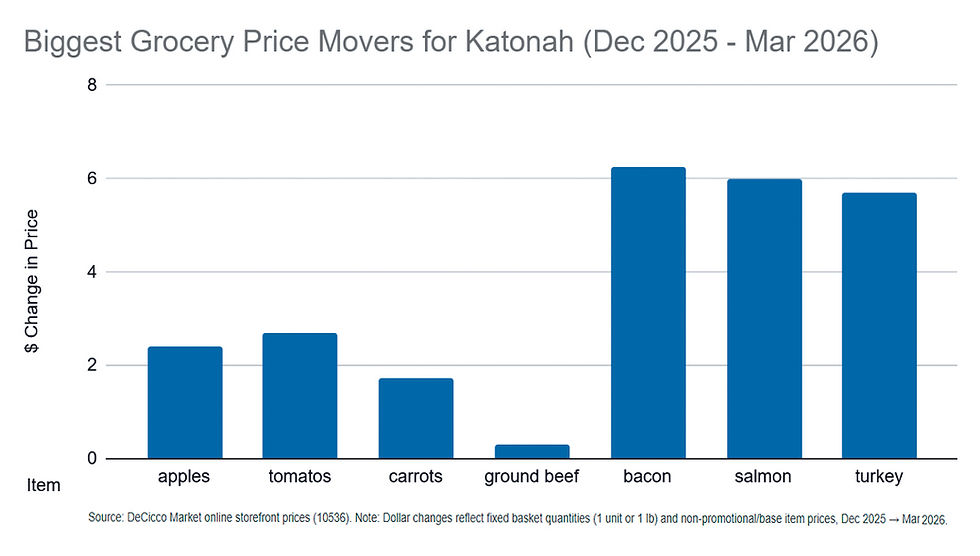
The biggest drivers were not spread evenly. Bacon, salmon and turkey each rose over $5 from December through March. Apples, tomatoes and carrots moved meaningfully, too. Staples like pasta, rice and canned goods barely moved at all.
The monthly volatility in the local data actually highlights something important: For everyday shoppers, price changes aren’t smooth or average in real life. A few staples, especially volatile categories like meat, seafood and some produce, can swing sharply, and those swings are exactly what people feel when they shop and plan meals.
National inflation numbers matter. But for a Katonah household shopping at DeCicco's, the last few months felt nothing like 0.44%.
Sam Greene lives in Katonah and is ajunior at King School.