

.png)


![CA-Recorder-Mobile-CR-2025[54].jpg](https://static.wixstatic.com/media/09587f_b989949ec9bc46d8b6ea89ecc2418a8a~mv2.jpg/v1/fill/w_370,h_150,al_c,q_80,enc_avif,quality_auto/CA-Recorder-Mobile-CR-2025%5B54%5D.jpg)


Give the lowly chipmunk the recognition it deserves
- May 8
- 3 min read
By ED KANZE
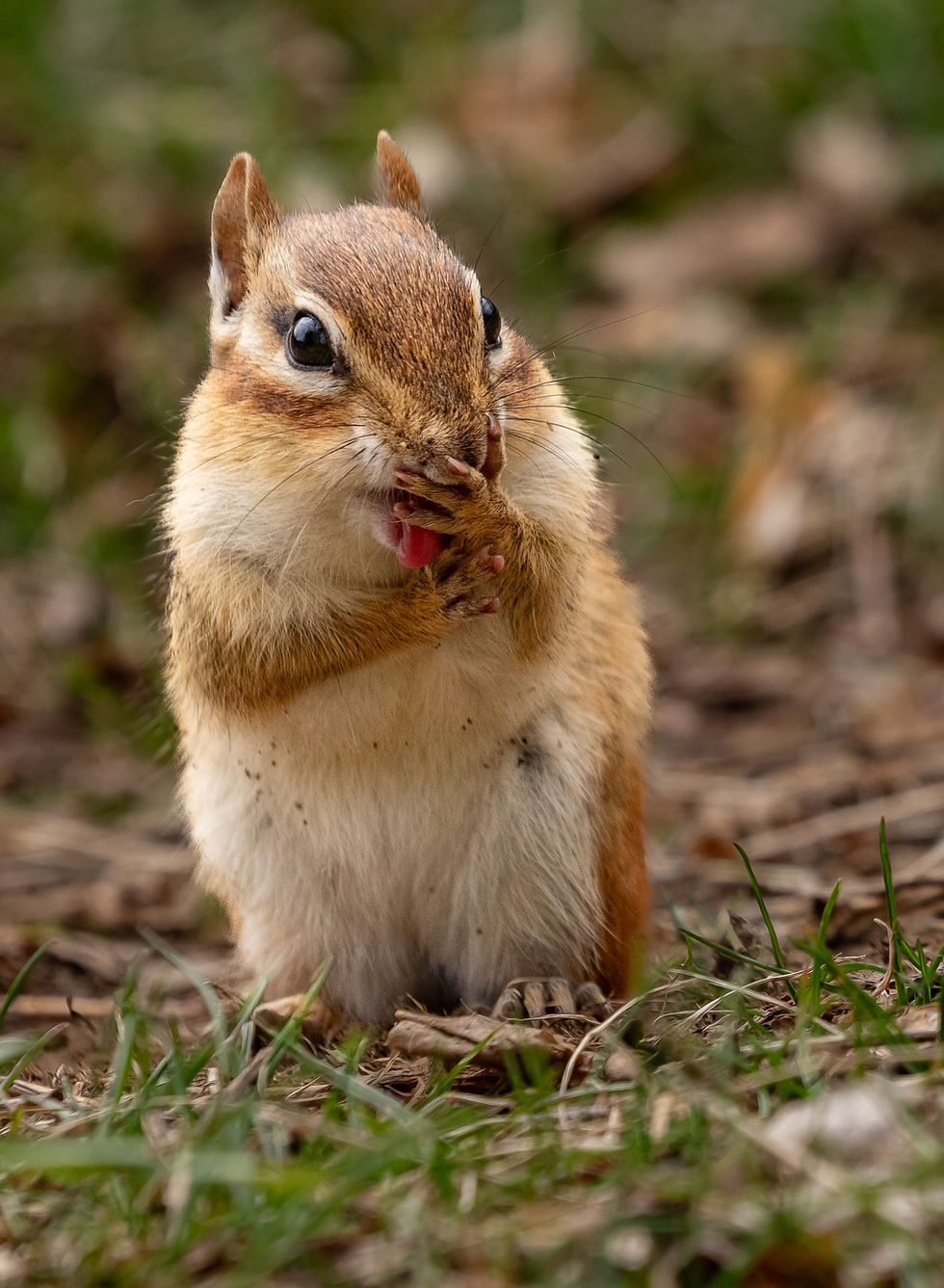
If asked to name the fairest mammal in all of northeastern North America, I don’t think I’d hesitate. I’d say the chipmunk. Yes, the lowly rodent with stripes on its back, lowly because it’s low to the ground and, because it’s common, much less thrilling to glimpse than a bobcat. The chipmunk has the kind of fetching, irresistible good looks that would make it a star attraction at the zoo if only it were 10 or a hundred times larger.
In recent days, I’ve had the privilege of spending a good deal of time with a particular chipmunk that keeps busy on the lawn and in the thicket near our house. I came to keep company with this particular chipmunk because it excavated a burrow right in the middle of a path we walk several times a day. The location seemed to be a bit in the middle of things, but to the chipmunk the geography must have made good sense.
Often I’d walk by and the chipmunk’s head would be sticking out of the hole. Other times I’d be near and the chippy would come bustling past me and dive headfirst into the burrow without any apparent concern for me knowing its whereabouts. Whether this trusting behavior is business as usual for a chipmunk, or not, is unknown to me. All I know for certain is that I can sit on the ground a few feet from the burrow entrance with a camera in my hand and shoot all the eastern chipmunk photos I want until the cows come home, or my back starts to hurt, or I start thinking about ticks too much, whichever comes first.
A fun thing about sitting still outside is you start noticing things you’d otherwise miss. I began to see northern flickers, a kind of ground-feeding woodpecker and probably our most abundant woodpecker in summer, commuting between various patches of the yard and a particular section of woods. I bet they’re carving out a nest there in a secret location, inside a tree with heart-rot. If there’s a more wary bird than the flicker, I can’t think of it. All I have to do is look up when I see one out of the corner of an eye, and the flicker rockets away.
I see and hear robins and blue jays coming and going, too, and black-capped chickadees sing love songs to other chickadees right over my head. And occasionally I hear chipmunks. I’ve learned from my friend Lang Elliott, who devoted a chunk of his life to studying chipmunk behavior in the Adirondacks, that chipmunks warn each other of danger with two different kinds of sounds. One is a sharp chip. That speaks of danger on the ground — a weasel, say, or a fox. A gulping sound means the predator is up above the ground somewhere. The last time I was out keeping company with the chipmunk, I heard the gulping sound repeated for two or three minutes. During that time, nary a striped rodent was to be seen.
Most of all, my quiet time near the chipmunk hole has produced observations of a chipmunk. I see the burrow-maker dive into the hole carrying food in its cheek pouches, and once it came with a big peanut we’d put out, and the peanut, which was still in the shell, took considerable shoving before it would finally go inside. Then I began noticing something I’d never seen a chipmunk do before. It was carrying bunches of leaves. There were too many to fit inside its mouth. Down into the burrow the chipmunk would take them. I’d also see my rodent companion rummaging on the ground, picking through leaves and rejecting one after another until it found just the right one to bring home.
What was the chipmunk up to? Was this a female lining a nest? Or maybe males line nests, too? I brought the question to Lang. He felt certain I was watching a female, and she was lining an underground den of her own creation, one where she might soon give birth. If I see babies eventually and get pictures of them, this tale will have a sequel.


