.png)


![CA-Recorder-Mobile-CR-2025[54].jpg](https://static.wixstatic.com/media/09587f_b989949ec9bc46d8b6ea89ecc2418a8a~mv2.jpg/v1/fill/w_370,h_150,al_c,q_80,enc_avif,quality_auto/CA-Recorder-Mobile-CR-2025%5B54%5D.jpg)


Shrooms with a view: Fantastic fungus at Westmoreland
- Dec 5, 2025
- 3 min read

By JOYCE CORRIGAN
Are mushrooms having a Cinderella moment?
The beguiling, bell-shaped, down-to-earth forest dwellers seem front and center of the modern zeitgeist due to an irresistible recipe of wellness trends and pop culture (hello, zombie predators in the hit sci-fi streamer “The Last of Us”). Mix in all the new scientific research about their extraordinary healing powers and ecological influence. Just thinking about the myriad marvels of mushrooms — not even counting the psychedelic “magic” ones — makes your head spin.
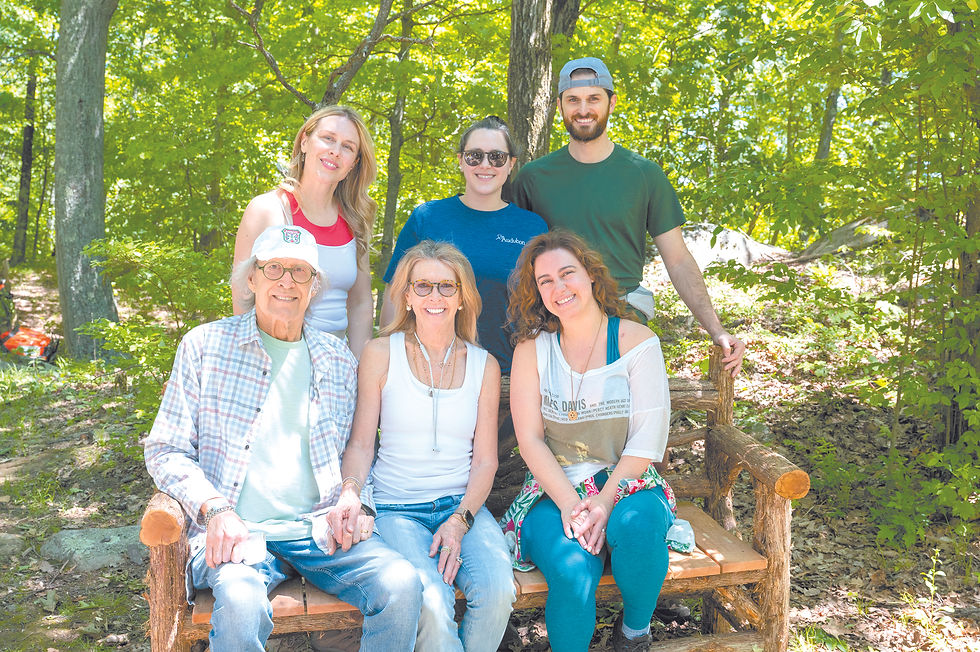
“The clearest way into the Universe is through a forest wilderness,” proclaimed 19th-century environmentalist John Muir, and last month attendees of the first annual Fall Fungi Hike at Westmoreland Sanctuary discovered how right he was. What began as a bracing 2-mile nature walk — with a surprise snowfall — turned into a fantastic journey to a subterranean world.
“I was absolutely blown away by how much I did not know about mushrooms,” said Bonnie Trotta of Mount Kisco, a Westmoreland board member. “The rather strange organisms we see above ground are just the tip of an underground network that extends for miles.”
Alice Roosevelt, naturalist administrator at the sanctuary, who led the tour, wasn’t in the least surprised at the impressive turnout.
“More and more people are fascinated by fungi,” she said. “People drive up from the city.”
The youngest hikers, crouching closer to the forest floor, enthusiastically spotted mushrooms “hiding” under logs that many adults overlooked.
“Mushrooms are really partners in our conservation mission,” Roosevelt explained. “Not only do they reserve and return carbon to the soil, but they also facilitate plant communication and decompose fallen trees, returning nutrients to the Earth.” In many ways, she added, they’re responsible for the trails themselves. “Without fungi, fallen trees would pile up over the years, and we’d never be able to clear paths.” When a distant tree crashed during the hike, Roosevelt laughed: “Mushrooms heading to work!”
They thrive in decay, turning ruin into renewal through vast, unseen mycelium networks. Their sudden emergence after even the biggest storms reminds us that resilience isn’t merely survival; it’s transforming adversity into new life.
The event’s November date wasn’t accidental. Fall is the closest thing to “mushroom mating season,” as the ideal conditions of cooler temperatures and moisture are peak times for them to grow and appear. They reproduce by releasing tiny spores that drift to new locations, grow into underground webs, join with compatible networks, and eventually produce mushrooms that release more spores. Fun fact: kicking them and sending them flying (as children like to do) or mowing them down with a lawnmower only helps them spread their spores over a wider area than they might naturally travel.
And while unlikely to compete in a garden beauty contest with orchids and dahlias, the odd shapes, unusual colors and patterns of mushrooms have an allure all their own.
Trotta, an experienced gardener, marveled at the turkey tail mushroom.
“Alice picked up what looked like a scabby-looking crust, but on closer inspection, we saw a perfect fan of feathers on top and elegant folds underneath,” she said.
Other stunning species at Westmoreland include the blue-stain fungi — the species dates to the Jurassic era — whose rare aquamarine fruiting stage attaches spores to bark beetles, and the dazzling Lactarius indigo, a bright blue mushroom that bleeds a blue “milk” when cut — another spore-spreading trick. Lactarius is edible when sautéed, provided positive identification is ensured.
Roosevelt and her team rely on tools like the iNaturalist app to confirm and record their finds. Still, technology can’t quite capture every swoon-worthy moment.
“The Luminescent Panellus emits an otherworldly glow in the dark, which is best seen on your own night table,” offered Roosevelt. She suggests picking off a piece and waiting until it’s completely dark in your bedroom. Let your eyes adjust for 10 minutes, and then tap it gently to trigger the glow. While the Panellus’s light likely evolved to attract nocturnal insects, for the rest of us, it’s pure mushroom magic.
Westmoreland Sanctuary is located at 260 Chestnut Ridge Road, Mount Kisco. For more information, visit westmorelandsanctuary.org.