.png)


![CA-Recorder-Mobile-CR-2025[54].jpg](https://static.wixstatic.com/media/09587f_b989949ec9bc46d8b6ea89ecc2418a8a~mv2.jpg/v1/fill/w_370,h_150,al_c,q_80,enc_avif,quality_auto/CA-Recorder-Mobile-CR-2025%5B54%5D.jpg)


Bedford Hills sows seeds of biodiversity
- Oct 31, 2025
- 3 min read


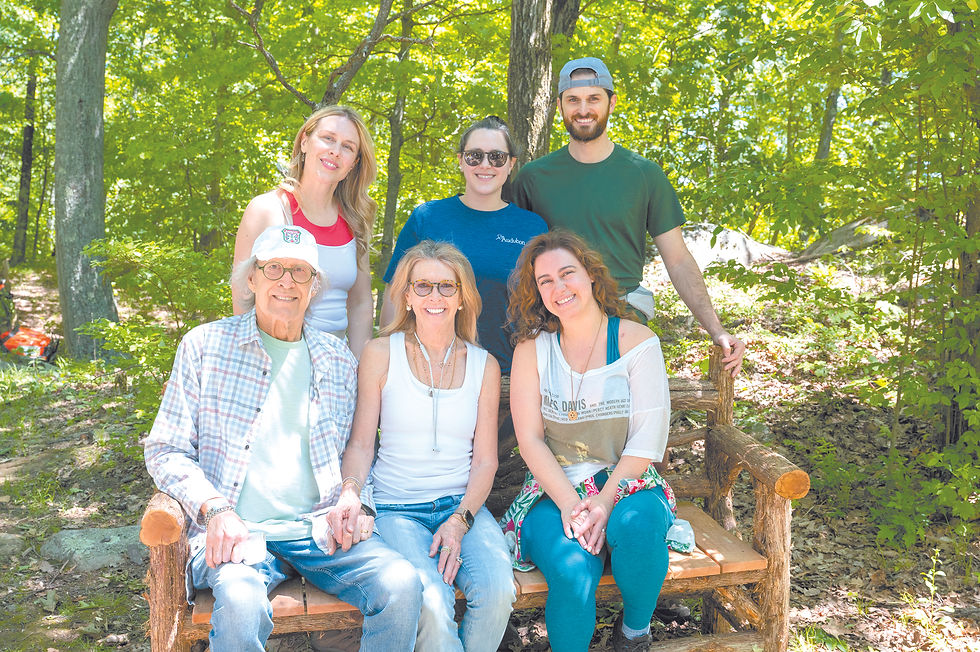
More than 100 people turned out for the annual free Native Plant Seed Event at the Bedford Hills Community House on Oct. 26. They had their choice of seeds representing more than 130 species of native plants. Amy Sowder photos
By AMY SOWDER
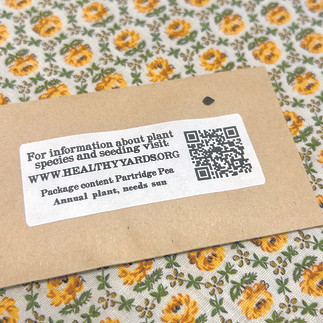
Amy “Eli” Trautwein stood behind the welcome table at the Bedford Hills Community House, holding up a small envelope of partridge pea seeds like a garden evangelist sharing good news.
“Everyone gets partridge pea seeds,” she told visitors streaming through the door on Sunday morning. “It’s a legume with thin pods, and sprouts come up within weeks.” She pointed to her finger representing the base of a stem. “See here? At the base of the leaf stem is the nectary, where nectar collects and ants crawl up and drink.”
More than a 100 people turned out for the free Native Plant Seed Event on Oct. 26, where volunteers filled attendees’ envelopes with their choice of seeds from buckets representing more than 130 species of native plants.
The event is part of a growing local movement to reverse the alarming decline of pollinators and restore ecological health one backyard at a time.
The urgency is real, said Filippine Hoogland, who organized the event and is a founder of Healthy Yards Westchester, which partnered with the town of Bedford and Wild Ones Lower Hudson Valley.
“We [may have] lost more than half our insects in the last 50 years, which leads to fewer birds, and it cascades,” she said. The main culprits, Hoogland said, are deer, conventional landscaping, climate change, and invasive species.
Healthy Yards originated when members of the Bedford 2030 Water and Land Use Task Force recognized how residential landscape management affects regional ecology and biodiversity. The organization now works cooperatively throughout Westchester to promote sustainable and regenerative landscaping.
Hoogland started a Healthy Yards plant swap at the Take It or Leave It Shed located at the Bedford Hills train station, inspired by the community sharing ethos. The plant swap runs each year 10 a.m. to noon on the first Saturday of the month from May to October. “It’s about sharing and supporting wildlife,” she said.
And as for the seed swap, that’s an annual event. What began 12 years ago with maybe three visitors to her own backyard has grown into a regional force, partnering with multiple Westchester organizations. Bedford Audubon volunteers also participated at the event, chatting with visitors and answering questions.
“In these difficult, polarized times, the garden is an escape. People turned to gardens during the pandemic, and they haven’t stopped. Plus, it’s really easy to plant natives, and then you have more pollinators,” Hoogland said.
For some attendees, the seed swap represented a turning point.
Deniz Ozkaynak of Cross River came armed with knowledge from a recent invasive species workshop in Lewisboro. “It was eye-opening,” he said. “I learned there were invasives all along my driveway, like devil’s walking stick or angelic tree, barberry, and winged euonymus. I came to find something to replace them.”
Ozkaynak filled all six of his envelopes with native seeds, including seeds for New York ironweed, a lacy, deep purple perennial. That workshop he attended, “Tackling Invasive Species with Partnership & Community Action,” was presented by Brent Boscarino, director of land stewardship at the New York-New Jersey Trail Conference and lead coordinator of the Lower Hudson Partnership for Regional Invasive Species Management. It was co-sponsored by the Lewisboro Library and Lewisboro Garden Club, of which he’s a member.
At another table, Allison O’Rourke demonstrated winter sowing techniques using repurposed milk jugs. O’Rourke started the Wild Ones Lower Hudson Valley Chapter in fall 2024. Using old milk jugs, cut in half three-quarters around and filled with soil, is “a cost-effective, low-impact way to do it,” she said, showing visitors how to prepare containers for the seeds.
Fall is an ideal time for planting native seeds, volunteers emphasized.
“Most are perennials,” Trautwein said. “They want winter sowing; they’ve adapted to that cold, wet period by sleeping until it’s safe to come up. They’ve adapted to avoid that early emergence.”
For more information, visit healthyyards.org.