

.png)


![CA-Recorder-Mobile-CR-2025[54].jpg](https://static.wixstatic.com/media/09587f_b989949ec9bc46d8b6ea89ecc2418a8a~mv2.jpg/v1/fill/w_370,h_150,al_c,q_80,enc_avif,quality_auto/CA-Recorder-Mobile-CR-2025%5B54%5D.jpg)


Plan unveiled to improve safety for pedestrians, drivers
- May 23, 2025
- 4 min read
By MARTIN WILBUR
Mount Kisco’s traffic and planning consultant presented the village board earlier this week with a draft plan for potential road improvements at several key locations in the community to enhance safety for pedestrians and motorists.
The Safety Action Plan for the Mount Kisco Complete Streets Study, completed by the Manhattan-based firm AKRF Inc., recommended a 25-mph village speed limit as well as a variety of traffic calming strategies such as curb extenders, restriping, new signage, speed humps and platforms and possibly installing pedestrian-activated signals that alert drivers to the presence of someone looking to cross a busy intersection.
After the consultant fine-tunes the report in the upcoming weeks, village officials are planning on submitting proposals for state and federal grants that would help pay for the improvements.
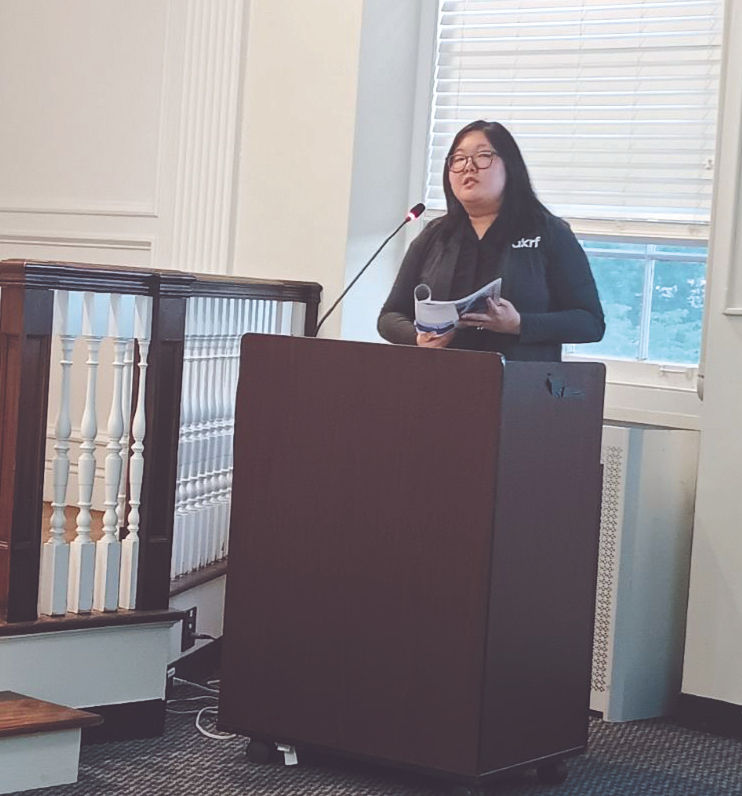
The deadline for submitting an application for the next round of $1 billion worth of the federal Safe Streets and Roads for All (SS4A) grants is June 26, said Elaine Du, a traffic engineer with AKRF and the project manager for the Mount Kisco Complete Streets Study. The SS4A grants are for implementation of generally larger, more expensive projects.
There are also smaller pots of money available with other grants that are for supplemental planning and demonstration for less complicated improvements, she said.
“We’re hopeful that, although it is competitive, if you don’t put all your eggs in one basket, you should be OK, which is why we want to get all three grant possibilities, not just implementation,” Du said at the Village Board’s May 19 meeting.
If the board approves a final action plan in the next few weeks, it will be the first municipality to take that step in Westchester County, according to Du.
With the help of resident feedback and the village’s complete streets committee, Du said her firm looked at every intersection in Mount Kisco and found several locations that had a high accident rate or incidents of speeding that could be good candidates for funding. There had been a rash of incidents, especially involving pedestrians and cars, that prompted officials to take action.
The West Main Street corridor, where it converges with Maple Avenue, Kisco Avenue and Main Street, has one of the highest number of accidents in the village, according to five years of data compiled between 2019 and 2024.
Working with the New York State Department of Transportation, changes to the timing of the traffic signal at that location, including four to seven-second delays in the changing of the signal to allow pedestrians to cross, installation of curb extenders that would shorten the crossings for pedestrians and signage improvements would make that intersection safer, Du said.
Other hot spots for proposed safety improvements include Lexington Avenue, the intersection of Main Street and Route 172 at Northern Westchester Hospital and Main Street at St. Marks Place near the exit for Leonard Park.
Du said that although Lexington Avenue, a county road, does not have high accident rates, residents and committee members stressed that because there are long stretches without lights, a very wide street and a lack of crosswalks it is difficult for pedestrians to cross.
At Columbus Avenue, where there is sizable pedestrian volume because of people heading to and from Neighbors Link, the inclusion of a crosswalk across Lexington Avenue, curb extensions and a high-intensity activated crosswalk similar to what was installed near Starbucks on South Moger Avenue, are all possibilities, Du said.
“Just because the data doesn’t show there are a lot of crashes, the residents, the committee had told us this is a corridor that we really want to focus on, that we really want to look at,” Du said.
The report suggested that the area near the Lexington-Radio Circle intersection could be made safer with restriping of an existing crosswalk, the addition of an additional crosswalk on the south side of the street, delaying the signal change for cars to provide pedestrians with more time to cross and extending curbs.
At Main Street and Route 172, Du noted that adjusting the time for pedestrians to cross a wide street would make the intersection safer. For the Main Street-St. Marks Place intersection, curb extensions and the pedestrian-activated signal would likely help, Du said. The crossing does not meet the federal threshold to install a conventional traffic signal, she added.
Reducing the speed limit from 30 to 25 mph on all village roads could be one step Mount Kisco takes to help deal with speeding drivers.
“So, based on our assessment, based on this engineering study that we conducted, we included that it is appropriate to reduce the village speed limit to 25 miles per hour,” Du said.
Mayor J. Michael Cindrich said he was hopeful that with AKRF’s study and their assistance in helping the village write the grant applications, Mount Kisco will be a safer place for people to walk, bike and drive.
“There’s things that we hope to do, we hope to get funding, and as we move along, hopefully we can improve not only pedestrian safety, but vehicular safety,” Cindrich said.
The board thanked members of the complete streets committee and other residents who provided their input.
“I don’t know if we’re going to get one dollar or $2 million or somewhere in between, but I know without the work you all did there would be zero dollars,” said trustee Tom Luzio.
Applicants for the SS4A grants will learn if their community receives funds before the end of the year, Du said. The process for implementation of improvements is about 18 months to two years.


