

.png)


![CA-Recorder-Mobile-CR-2025[54].jpg](https://static.wixstatic.com/media/09587f_b989949ec9bc46d8b6ea89ecc2418a8a~mv2.jpg/v1/fill/w_370,h_150,al_c,q_80,enc_avif,quality_auto/CA-Recorder-Mobile-CR-2025%5B54%5D.jpg)


Wild Things: The blossoms of summer
- Jun 22, 2025
- 3 min read


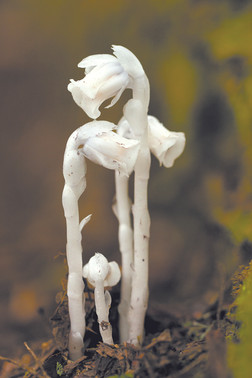
Horned bladderwort flowers. Indian pipe. Common milkweed flowers. ED KANZE PHOTOS
By ED KANZE
The summer solstice comes, and in the woods, things seem to slow down. Wildflowers abundant and widespread in spring diminish, and in many places, there are no flowers to be seen at all. The leaf canopy overhead expands and becomes nearly complete, casting the forest floor in gloom. If you’re an organism dependent on solar energy to make your living, and you’re not a veritable skyscraper, summer brings great challenges.
That said, there’s still a whole lot going on out there botanically. Trees and shrubs that appear to stand there doing nothing are in fact fabulously busy. They’re manufacturing the following year’s leaves and blossoms. When you think about it, these can’t be produced during the winter. Woody plants are “hardened off” and largely shut down for business. So the difficult, elaborate work of manufacturing the leaves and flowers that will be unfurled in spring is largely accomplished the preceding summer.
Late June, July and August bring many fewer wildflowers than late March, April and May, yet fewer does not mean none. Some of the most interesting plants in the woods erupt from the leaf litter and bloom in summer. One of them is Indian pipe, a white, non-photosynthetic plant in the heath family that could easily be mistaken for a mushroom.
Indian pipe has a life story much too complicated to be described in detail here. If you want the full treatment, you might read a book written by a late, great, lifelong friend of mine, Carol Gracie, who lived much of her life in northern Westchester. Carol’s “Summer Wildflowers Of The Northeast” (Princeton, 2020) was the last major work completed during a long and productive lifetime. In it there is much to be learned, including the fascinating life history of the Indian pipe. This strange plant used to be described by naturalists as a saprophyte, a zombie-like consumer of the dead. But in fact the plant parasitizes mycorrhizae, which are fungi that form mutually beneficial business partnerships with green plants. Seeming to pass itself along as a green plant, Indian pipe taps the green-plant-fungus network for the contributions made by fungi in the genera Russula and Lactarius while paying nothing back. Green plants reward their fungal partners with sugar they make in their leaves. Indian pipe has evolved the habit of cheating the system.
To my eyes, some of the finest floral color in summer appears on the tops of carnivorous wetland plants called bladderworts. Horned bladderwort is the member of the group I know best. It generally grows in floating mats or on hummocks in shallow warm water. Fine, thread-like roots extend below, and on them appear great numbers of what look like tiny balloons. Tiny crustaceans and other mini-animals in the water collide with these accessories, which are called bladders. When a collision occurs, the bladder collapses, creating suction. The tiny animal is sucked inside and digested.
Most of this we do not see. What we do observe are masses of brilliant yellow horned bladderwort flowers looking top-heavy on the summits of slender erect stems. Horned bladderwort flowers are rarely seen up close except by those who poke around soupy wetlands in canoes and kayaks. From shore, however, we can easily admire them — great yellow masses of astonishing brightness.
Milkweeds are summer flowers, too. The name “weed” is generally a slander on plants that are wildly successful. Most of our milkweeds are natives, and their importance to insects such as the monarch butterfly are well known. Common milkweed advertises its presence with wide globular clusters of lavender flowers easily spotted along a roadside from a speeding car or bicycle. Purple milkweed and swamp milkweed, more delicate but equally fetching, bloom in summer, too.


