

.png)


![CA-Recorder-Mobile-CR-2025[54].jpg](https://static.wixstatic.com/media/09587f_b989949ec9bc46d8b6ea89ecc2418a8a~mv2.jpg/v1/fill/w_370,h_150,al_c,q_80,enc_avif,quality_auto/CA-Recorder-Mobile-CR-2025%5B54%5D.jpg)


What’s in Season: North American pawpaws
- Oct 3, 2025
- 3 min read


By AMY SOWDER
Pawpaws are having a moment. Why is this northeastern tropical-like fruit with a mild banana-apple-mango flavor so popular lately?
“I want to thank the pandemic for bringing people back to the garden,” said Patrick McDuffee of Well-Sweep Herb Farm, one of the plant-sale vendors and presenters at the Herb Fair & Market in Katonah on Sept. 20.
Growing more than 1,898 varieties of herbs and perennials — one of the largest collections in the U.S., according to the farm — Well-Sweep is based in Port Murray, N.J. It also has animals, display gardens, a nursery sales area and greenhouses.
Available only at garden shops, farms and markets like Well-Sweep, pawpaws aren’t commercially viable for big agriculture, due to their short shelf life and easy-bruising skin. That makes the 27-plus varieties of pawpaw even more treasured to locals — at least recently. Pawpaw can be called “tropical” because it’s part of the Annonaceae family of fruit that are primarily found in tropical and subtropical regions.
“Nobody knew about it two years ago, and now everyone’s talking about them,” McDuffee said, adding, “They taste like banana custard.”
The largest edible fruit trees native to North America, pawpaw trees in northern Westchester generally fruit in September, sometimes going into October, weather permitting. Some homebuyers find these trees in their new yards and contact McDuffee to learn more about them.
Known by the scientific name asimina triloba, don’t confuse pawpaw with papaya. Australians call papayas pawpaws. That confusion grew more after Baloo’s shout-out in the “Bare Necessities” song from Disney’s animated classic “The Jungle Book.”
Our beloved native fruit does have many folksy nicknames, including custard apple, Quaker delight, Hoosier banana or Indian banana.
Pawpaws have a long documented history. In 1541, conquistador Hernando de Soto’s expedition recorded indigenous people growing and eating pawpaws in the Mississippi Valley. Today, several towns are named after the fruit, including those in Michigan, Illinois, Kentucky and Maryland.

Project Pawpaw, a research, breeding and marketing organization for the fruit, documents more than 15 pawpaw festivals in the Northeast, Midwest and Mid-Atlantic Coast. Pawpaw’s popularity rise two or three years ago is reflected in the 200% increase in new events across the country, from small community gatherings to large regional festivals, according to Project Pawpaw.
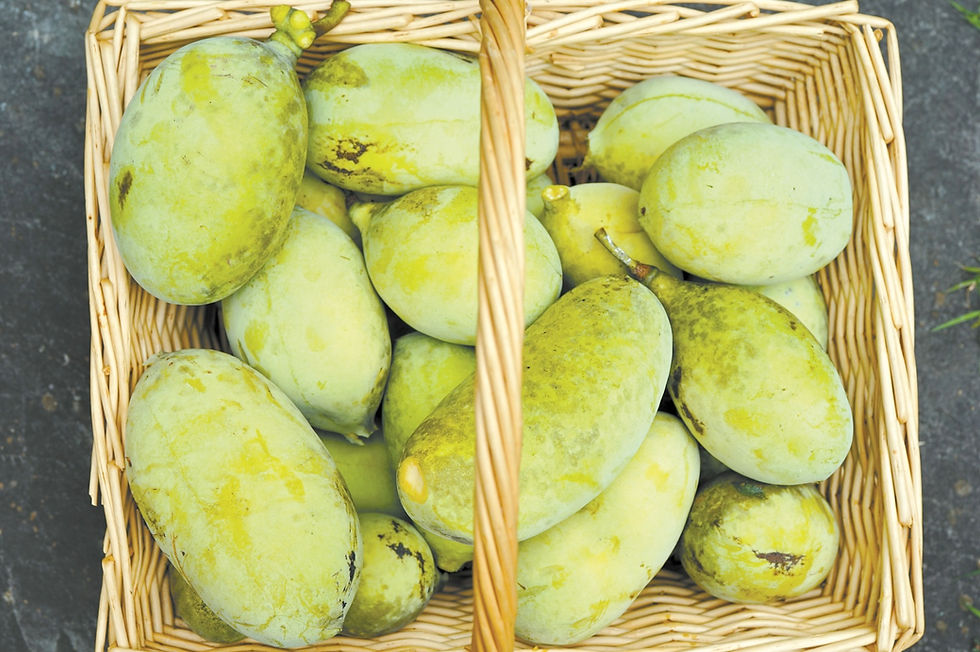
This fruit is greenish-blackish on the outside and usually 3 to 6 inches long. The gooey flesh is pale to bright yellow with shiny dark seeds. The tree prefers partial shade. An individual pawpaw tree is not able to pollinate itself — it must get pollen from another genetically different pawpaw individual.
“Needs to grow for five years before flowering,” McDuffee said.
When the fruit is almost ripe, the stems break off with no resistance from the branch. They’ll have a little give under the skin, like a perfect peach.
They’re great in puddings, ice creams and smoothies. Don’t use pawpaws in recipes that require heat, which can activate volatile pawpaw components that cause gastrointestinal distress in some people. So stick with raw recipes.
Pawpaws are so custardy that you can’t dice them like mangos. Try cutting them in half and squeezing out the flesh over a colander. Use the flesh immediately or store for a day with a squeeze of lemon to prevent oxidizing, plus press plastic wrap right on the surface in a container. Freeze pawpaw pulp in a resealable plastic bag.
Pawpaws are high in vitamin C, magnesium, iron, copper and manganese, plus several other vitamins and minerals.
To get your own seedling closer to home, check with Hilltop Hanover Farm’s native plant specialists, or call local plant nurseries, such as Michael’s Garden Gate Nursery in Mount Kisco, Bedford Farms, Troy’s Garden Nurseries, and Perennial Nurseries in Bedford, Mill River Supply in Bedford Hills and Katonah Nursery — or just order it online and have it delivered, at directnativeplants.com or www.fast-growing-trees.com.
Amy Sowder has worked for Bon Appétit, Women’s Health, Food Network, Farm Journal, Westchester Magazine, Chowhound, VeryWell, LoHud and USA Today. She edits Cook’s Illustrated magazine, writes for Everyday Health, and is collaborating on a historical novel.


