.png)


![CA-Recorder-Mobile-CR-2025[54].jpg](https://static.wixstatic.com/media/09587f_b989949ec9bc46d8b6ea89ecc2418a8a~mv2.jpg/v1/fill/w_370,h_150,al_c,q_80,enc_avif,quality_auto/CA-Recorder-Mobile-CR-2025%5B54%5D.jpg)


There’s a wallpaper for every taste
By JOYCE CORRIGAN
If these walls could talk? Today, just try to silence them. After a decade-plus of “quiet luxury” — with walls painted 50 shades of white or the occasional beige — wallpaper is back. With plenty to say.
From bold, unconventional and unapologetically maximalist to understated and textural — almost too tempting not to touch — modern wallpapers are turning rooms into immersive experiences.
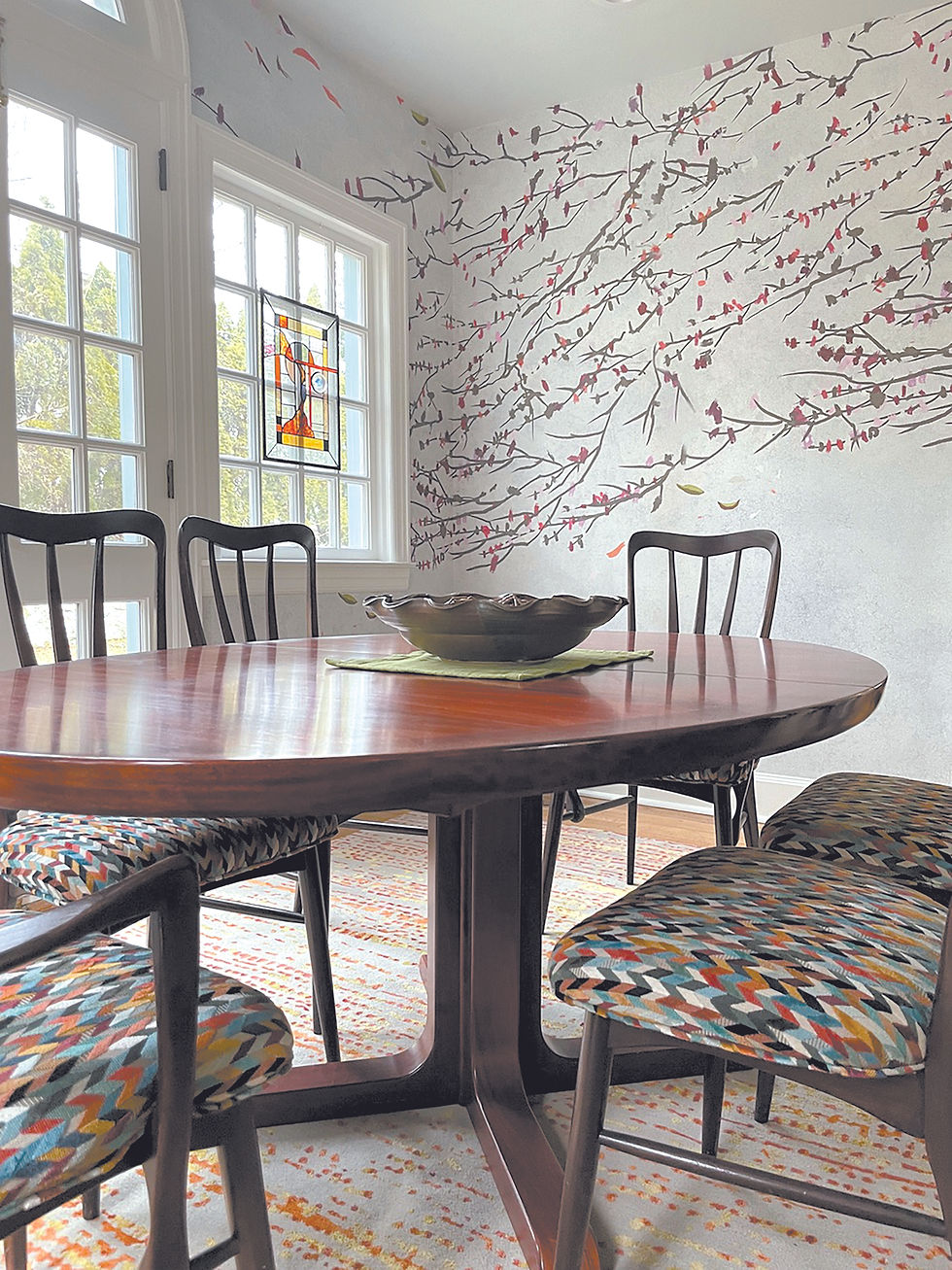
Graceful leaves liberated from their branches dance around the four walls of a dining room, while a bedroom pays homage to Brooklyn with an edgy monochromatic toile featuring Coney Island, pigeons, hip-hoppers with boomboxes and the Bridge. Urban chic perhaps, but this same toile is a French decorative tradition dating back to the 1700s.
Elsewhere, it’s flights of fancy: a home office with stylishly dressed animal passengers framed within airplane windows; and a bar alcove where zebras do the can-can; a rhino showgirl juggles martini glasses; and a dapper gentleman giraffe poses beside a potted palm.
In recent months, the gurus at Veranda, Elle Decor and countless design platforms have heralded a new wave of wallpaper dominating interiors. Decorators and homeowners are no longer confining the fun to powder rooms, nurseries or cocktail bars. Each installation is a conversation starter and a fresh take on a seemingly old-fashioned design element.
Old? You can say that again. Decorative wallpaper’s story begins in 8th-century China (fair enough, they invented paper) which, a millennium later, inspired the painted landscapes, flora and fauna that captivated aristocrats in France and England and soon turned wallpaper into a commercial industry. Even Colonial and Federalist America got the hang of it.
Of course, our recent fling with bare, white walls is actually the aberration. Cave paintings from Sulawesi to Lascaux suggest that humans have had a powerful impulse to ornament our interiors since prehistoric times.
Wallpaper indulgence is hardly niche. Americans today spend upward of $600 million a year on it, with digitally printed designs growing faster than the overall market. Think fantastical botanicals, surreal safaris and iconic pop-art portraits. Technology has liberated wallpaper from most every limitation.
“Wallpaper has definitely seen a resurgence,” observed Laura Nally, design manager of Wallauer Paint Hardware Design in Bedford Hills. “During COVID, people added lively wallpaper as a backdrop for Zoom calls — injecting joy into an otherwise very bleak period. But what started as an accent wall has morphed into wrapping entire rooms.”
The white and cool grays that ruled 10 years ago have, Nally continued, “transitioned to warmed-up colors that satisfy a longing for coziness, comfort and serenity.”
Interior designer Margaret Wilson, who founded her Bedford Village-based firm in 1996, agreed, emphasizing that wallpaper’s power extends well beyond color.
“A home always needs a punch or a splash of something,” she explained. “But no matter how vivid the hue — even if it’s a shiny lacquer — paint finishes just don’t convey the depth and personality that wallpaper does.”
There are infinite options, from traditional and contemporary florals and scenic toiles to stripes, geometrics, metallics and tactile grass cloths. Legendary European brands de Gournay, Pierre Frey and Zuber (established 1797) share the field with American firms like Schumacher, Thibaut, Brunschwig & Fils and the edgy Brooklyn-based Flavor Paper.
“I help clients narrow down their choices by bringing home an array of globally sourced samples,” said Wilson. “I also encourage them to step back and look at the big picture of what the wallpaper will actually look like in the room.”
Wilson also takes a client’s fashion sense into account and has even been known to ask to see their wardrobe.
“Wallpaper is very personal,” she said. “It should reflect your experiences, your travels, your aspirations. If you’re going to commit to it, you should love it.”
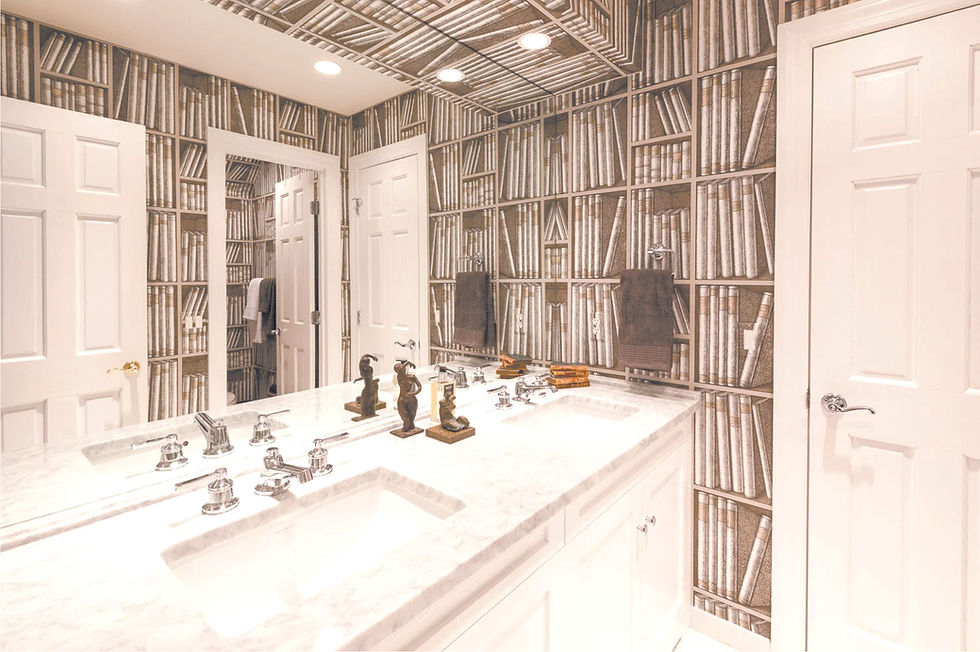
Wilson brought her client-focused creativity to the renovation of a 1980s house in Pound Ridge, where a bathroom shared by two college-age brothers offered an opportunity for a little design mischief. “I felt the bathroom should be interesting and dramatic,” she recalled, and so she enveloped the room in a trompe-l’œil panorama of bookshelves, transforming the relatively small bath into a three-dimensional library. She even papered the soffit, creating a whimsical world of never-ending books.
“The message was unmistakable,” Wilson laughed. “Keep reading!”
Bedford Hills author Jill Brooke chose a joyful Asian floral by Schumacher for her 18th-century dining room. “I always go for ‘happy’ in decorating,” said the author of “The Genius of Flowers,” particularly in rooms where we celebrate holidays or milestones. Such gatherings are like vines connecting family and friends to my trellis of traditions.”
But today, even minimalists can paper their world with personality. Nally recently reimagined her own primary bedroom in a beautiful neutral-toned grass cloth.
“The texture is so inviting,” she said. “Every time I enter the room, it feels like a warm hug.”
Wilson only cautions against wallpapering with abandon. “Not every room in your house should be wallpapered,” she said. “You and your eyes need downtime.”
Ultimately, the house rule is simple: Pick something you can live with. As Oscar Wilde, the flamboyant Victorian playwright and master of wicked wit, lay dying in a shabby Parisian hotel, he reputedly rallied to survey his surroundings and quipped: “Either that wallpaper goes, or I do!”